
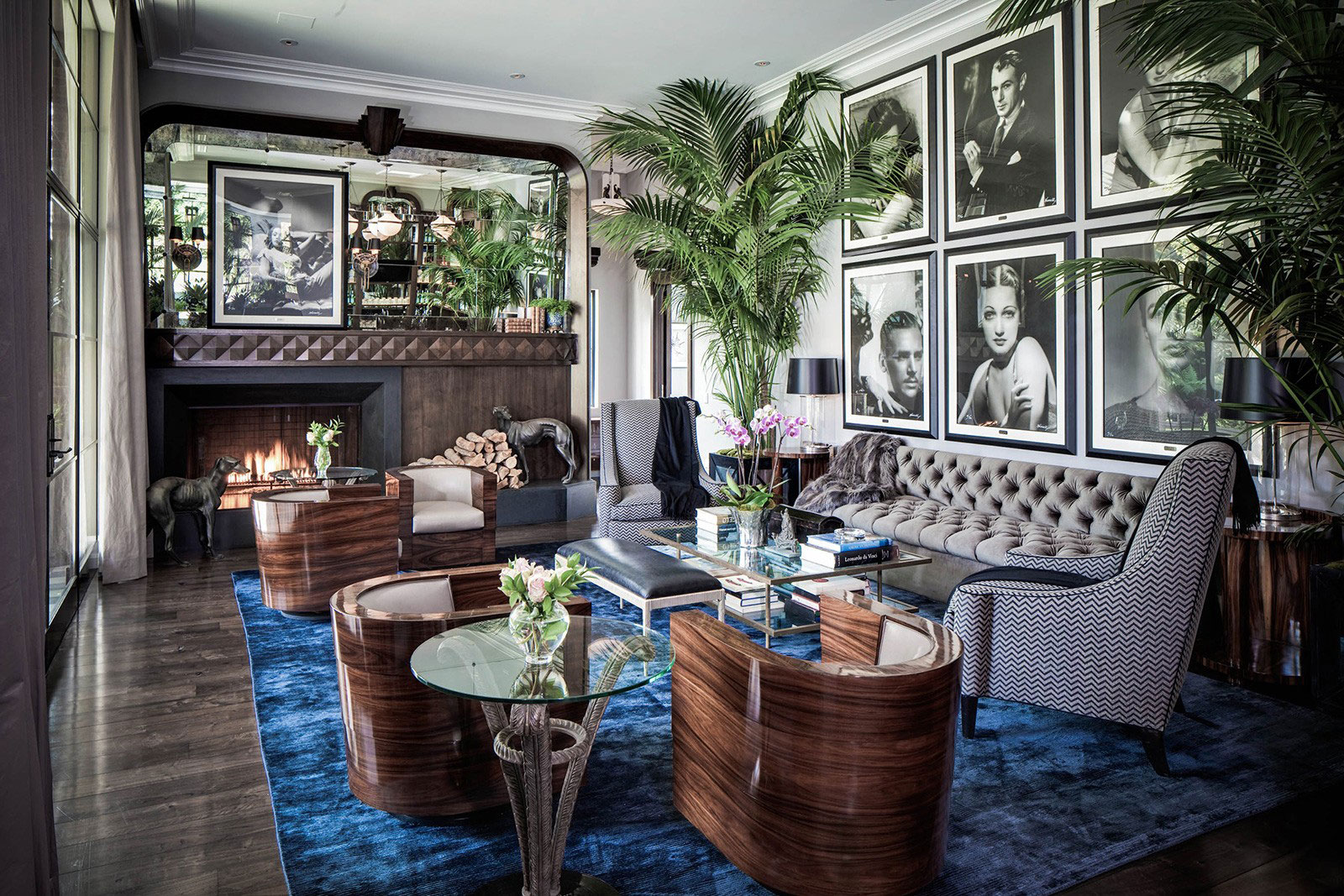
Art Nouveau interior design is a style that emerged in the late 19th and early 20th centuries, influenced by nature, art, and crafts. It features floral patterns, curves, linear designs, and elegant silhouettes in architecture, furniture, glassware, jewelry, and other decorative arts.
What Is Art Nouveau Design?
The term Art Nouveau was derived from a gallery in Paris opened by the art dealer Siegfried Bing in 1895. It was also known by different names in different countries, such as Jugendstil in Germany, Modernisme in Catalonia, Stile Liberty in Italy, and Secession in Austria.
Art Nouveau was characterized by its use of long, sinuous, organic lines and floral motifs. It was applied to various forms of art, such as architecture, interior design, glass, posters, and illustration.
Origins and History of Art Nouveau Style
Art Nouveau was an ornamental style of art, design, and architecture that flourished between about 1890 and 1910 in Europe and the United States. It emerged as a conscious effort to establish a distinct design style, one that moved away from the prevalent historicism of the 19th century. The movement drew inspiration from the English Arts and Crafts movement and the ideas of William Morris, who championed the values of craftsmanship, nature, and social reform.
This style was a reaction against the industrialization and urbanization of the 19th century. It celebrated nature, beauty, and human creativity. It also challenged the traditional hierarchy of the arts and made art more accessible and affordable to a wider audience by using handmade and industrial production methods.
Art Nouveau reached its peak at the 1900 Paris International Exposition. It declined after World War I, as it was replaced by other modernist movements such as Art Deco.
Exploring Art Nouveau Home Décor
Add glamorous style into your home by following these Art Nouveau decorating ideas:
Use hardwood floors and a combination of wood, glass, and stones.
Choose soft colors for the color scheme, such as a beige bathroom.
Decorate with paintings, rugs, drapes, chandeliers, and lampshades.
Incorporate curves, twirls, and flowers in the furniture, accessories, and architecture.
Avoid clutter and use only a few focal pieces that showcase the style.
Paint the walls in pastel colors or apply wallpaper with floral or geometric patterns.
Use floral wallpaper as a bathroom accent wall idea.
Add some decorative ornaments, such as a strip with flowers close to the ceiling or a mosaic tile surrounding the fireplace.